

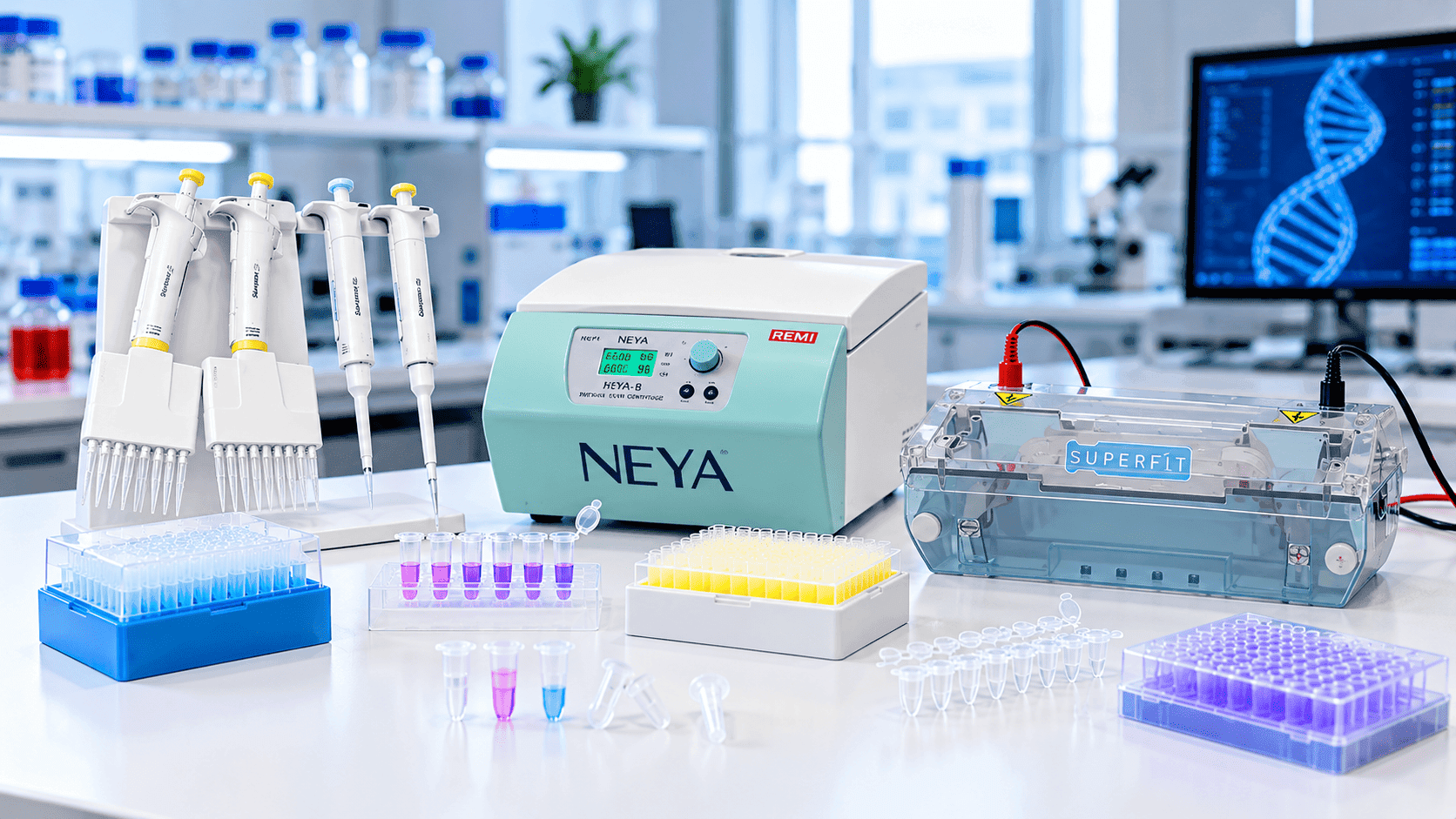
Molecular biology and genomics research depend on accurate sample preparation, reliable nucleic acid analysis, controlled experimental conditions, and consistent data quality. From DNA and RNA extraction to polymerase chain reaction (PCR), gene expression analysis, and DNA sequencing, every stage of the workflow relies on equipment suited to the application.
For universities, biotechnology companies, pharmaceutical research teams, molecular diagnostics laboratories, and genomics facilities, choosing laboratory equipment is not simply a matter of purchasing individual instruments. The equipment must work together as a complete system, supporting reproducibility, contamination control, sample integrity, and efficient laboratory operations.
The essential equipment for a molecular biology laboratory typically includes precision micropipettes, microcentrifuges, vortex mixers, thermal cyclers, electrophoresis systems, nucleic acid quantification instruments, appropriate cold-storage equipment, and suitable laboratory consumables. Genomics facilities may require additional capabilities, such as automated nucleic acid extraction, real-time PCR, fragment analysis, and DNA sequencing.
The right configuration depends on the laboratory's research objectives, sample types, throughput, analytical methods, and budget.
This guide explains the major equipment categories, their roles in molecular biology and genomics workflows, and the practical considerations laboratories should evaluate before purchasing.
1. Understanding Equipment Requirements in Molecular Biology and Genomics
Molecular biology focuses on the structure, function, and manipulation of biological molecules, particularly DNA, RNA, and proteins. Genomics extends this work to the analysis of genetic information across individual genes or entire genomes.
Although the two fields overlap, their equipment requirements can differ significantly.
A teaching laboratory performing conventional PCR and agarose gel electrophoresis will have different requirements from a genomics research centre processing hundreds of DNA samples for next-generation sequencing.
A useful starting point is to map equipment requirements to the experimental workflow.
Research stage | Primary purpose | Typical equipment |
|---|---|---|
Sample preparation | Prepare and homogenize biological samples | Micropipettes, vortex mixers, centrifuges, homogenizers |
DNA/RNA extraction | Isolate nucleic acids | Microcentrifuges, extraction systems, appropriate workstations |
Quantification and quality assessment | Measure concentration and assess sample quality | UV-Vis spectrophotometers, fluorometers, electrophoresis systems |
DNA amplification | Amplify selected genetic sequences | Conventional thermal cyclers, real-time PCR systems |
Fragment separation | Separate DNA or RNA fragments | Gel electrophoresis systems and power supplies |
Genetic analysis | Investigate sequence, variation, or gene expression | Sequencing platforms and application-specific analytical instruments |
Sample preservation | Maintain sample and reagent integrity | Laboratory refrigerators, freezers, ultra-low-temperature freezers |
Laboratory support | Maintain suitable working conditions | Biosafety cabinets where required, sterilization equipment, suitable water systems |
Not every laboratory needs every instrument. Equipment selection should follow the planned research methods rather than a generic list of laboratory purchases.
2. Precision Micropipettes and Liquid-Handling Systems
Micropipettes are among the most frequently used instruments in molecular biology. They enable researchers to transfer small, controlled liquid volumes during DNA/RNA extraction, reagent preparation, PCR setup, and nucleic acid quantification.
When working with microlitre volumes, even small pipetting inconsistencies can affect reaction composition and experimental reproducibility.
Types of pipettes used in molecular biology
Single-channel micropipettes: Suitable for individual samples, reagent preparation, and flexible workflows.
Multichannel micropipettes: Allow simultaneous liquid transfer across multiple wells in a microplate, improving throughput.
Electronic pipettes: Can help standardize repetitive dispensing tasks and reduce repetitive manual effort.
Adjustable-volume pipettes: Accommodate different liquid volumes within the instrument's specified range.
What should laboratories evaluate?
Volume range and accuracy: Select pipettes that cover the volumes required by the protocols. A single pipette should not be expected to perform optimally across every possible volume.
Calibration and maintenance: Pipettes require periodic performance checks, appropriate servicing, and calibration at intervals determined by usage, risk, and laboratory quality procedures.
Contamination prevention: Filter tips are particularly useful in sensitive molecular workflows where aerosols may carry nucleic acids between samples or into reagents.
Ergonomics: Laboratories performing repetitive pipetting should consider grip, operating force, weight, and ease of volume adjustment.
Compatibility: Confirm that the selected pipettes and tips fit together properly and that consumables meet the required application specifications.
For research teams, a carefully selected set of pipettes and compatible tips is often a more valuable starting point than investing immediately in a fully automated liquid-handling platform.
Explore the laboratory equipment and consumables available from Superfit Continental, including its precision pipette and laboratory plasticware categories.
3. Microcentrifuges and Refrigerated Centrifuges
Centrifugation separates sample components by applying centrifugal force. In molecular biology, centrifuges support nucleic acid extraction, cell harvesting, pellet collection, clarification of lysates, and preparation of samples for downstream analysis.
The required centrifuge depends on sample volume, vessel format, relative centrifugal force, temperature requirements, and the experimental protocol.
Microcentrifuges
Microcentrifuges are designed for small-volume tubes, commonly including 1.5 mL and 2.0 mL formats. They are widely used in routine DNA and RNA preparation, precipitation steps, and other small-volume molecular workflows.
When evaluating a microcentrifuge, consider:
Maximum relative centrifugal force (RCF).
Rotor capacity and compatibility with sample tubes.
Fixed-angle rotor design and available adapters.
Lid-locking and imbalance-protection features.
Ease of cleaning and routine maintenance.
Refrigerated centrifuges
Temperature control becomes important when samples or reagents are sensitive to heat generated during centrifugation. Refrigerated models can help maintain specified sample temperatures during appropriate procedures.
They may be useful for selected nucleic acid preparation methods, cell-processing applications, and other temperature-sensitive research workflows.
A key purchasing principle is to evaluate RCF rather than RPM alone. RPM measures rotational speed, while RCF expresses the relative force applied to the sample. The relationship depends on rotor radius, so two centrifuges running at the same RPM may produce different centrifugal forces.
Superfit's guide to choosing the right laboratory centrifuge provides additional guidance on capacity, rotor selection, temperature control, and application requirements.
4. Vortex Mixers, Thermal Blocks, and Water Baths
Sample preparation often involves repeated mixing, incubation, and temperature-controlled steps. These activities may appear routine, but inconsistent preparation can introduce variation before the main analytical experiment even begins.
Vortex mixers
Vortex mixers rapidly mix liquids in compatible tubes. They are useful for resuspending pellets, mixing extraction reagents, and homogenizing small-volume samples when the protocol permits.
Select a model based on speed control, tube compatibility, operating stability, and expected frequency of use.
Dry heating blocks
Dry blocks provide controlled heating for compatible tubes and vessels. They are often used for incubation, reagent preparation, enzyme inactivation where specified, and other protocol-dependent temperature steps.
Check block compatibility with the tube formats used in the laboratory. Temperature uniformity and actual sample temperature are more meaningful than the displayed set point alone.
Laboratory water baths
Water baths maintain samples at a controlled temperature using a heated water environment. They are appropriate for procedures that specifically call for water-bath incubation.
Laboratories should consider temperature stability, uniformity, tank capacity, cleaning requirements, and whether direct water contact is compatible with the sample vessels and procedure.
A dry block and a water bath are not always interchangeable. The choice should follow the validated or established protocol, especially for sensitive enzymatic reactions.
5. PCR Thermal Cyclers and Real-Time PCR System
Polymerase chain reaction is a fundamental technique for amplifying specific DNA sequences. Thermal cyclers automate the temperature changes required for repeated cycles of DNA denaturation, primer annealing, and extension.
The type of PCR system required depends on whether the laboratory needs endpoint amplification, quantitative analysis, or another fluorescence-based application.
Conventional PCR thermal cyclers
A conventional thermal cycler amplifies DNA according to a programmed temperature profile. The resulting products are generally evaluated after amplification, often using gel electrophoresis.
Important selection criteria include:
Block capacity and compatibility with tubes, strips, or plates.
Temperature accuracy and uniformity.
Heating and cooling performance.
Gradient functionality when optimization across annealing temperatures is needed.
Program storage, data export, and user access controls where relevant.
A smaller block may be sufficient for a research group processing limited numbers of samples. Higher-capacity instruments may be justified when sample throughput or shared laboratory use increases.
Real-time PCR systems
Real-time PCR, commonly called quantitative PCR or qPCR, monitors fluorescence during amplification. Depending on the assay, this allows researchers to estimate the quantity of a target nucleic acid or compare its abundance across samples.
Reverse-transcription qPCR (RT-qPCR) combines RNA-to-cDNA conversion with quantitative PCR analysis, either within a single workflow or in separate steps.
Real-time systems should be evaluated for optical channels, supported fluorophores, detection sensitivity, software capabilities, compatible consumables, and the assays the laboratory intends to run.
Conventional PCR and real-time PCR are not direct substitutes in every workflow. A conventional thermal cycler is appropriate for endpoint amplification, while qPCR is needed when the experimental method requires real-time fluorescence measurement.
Also, a qPCR instrument does not replace all sample preparation or quality-control equipment. Reliable results still depend on suitable extraction methods, clean reagents, accurate pipetting, appropriate controls, and validated procedures.
6. Gel Electrophoresis and Gel Documentation Systems
Gel electrophoresis separates nucleic acid fragments according to their movement through a gel under an electric field. It is commonly used to evaluate conventional PCR products, investigate DNA fragment sizes, and assess certain aspects of nucleic acid integrity.
A typical setup includes an electrophoresis chamber, gel tray, combs, power supply, compatible buffer, and suitable nucleic acid detection equipment.
Horizontal and vertical electrophoresis
Horizontal electrophoresis is commonly used for agarose gels, making it suitable for many routine DNA fragment-separation applications.
Vertical electrophoresis is generally associated with polyacrylamide gels and particular separation methods, including applications involving proteins or nucleic acids that require different resolution characteristics.
The gel matrix, buffer, voltage, running time, and staining method should all be appropriate for the target molecules and the resolution required.
Why gel documentation matters
A gel documentation system captures images of stained gels under suitable illumination. It supports record keeping, band analysis, comparison between experiments, and documentation of research results.
When selecting a system, consider:
Compatibility with the stains and detection chemistry used.
Appropriate UV or blue-light illumination.
Camera sensitivity and image resolution.
Image analysis and export functions.
Safety features that minimize exposure to hazardous illumination.
Blue-light systems may be suitable for compatible fluorescent stains and can reduce some of the DNA damage associated with UV exposure. However, the correct illumination method depends on the dye and downstream application.
A gel image provides useful evidence of fragment size and amplification patterns, but it does not independently establish the identity or sequence of a DNA fragment.
7. Spectrophotometers and Fluorometers for Nucleic Acid Quantification
Before PCR, sequencing, or other downstream analysis, researchers often need to determine the concentration and quality of DNA or RNA.
Two important instrument categories are UV-Vis spectrophotometers and fluorometers.
UV-Vis spectrophotometers
These instruments measure light absorbance at selected wavelengths. Nucleic acids absorb ultraviolet light, allowing concentration estimates using suitable measurement methods.
Depending on the instrument and sample, absorbance measurements can also provide ratios used to assess potential contamination.
For example, a 260/280 absorbance ratio can help identify possible protein or other contamination, while a 260/230 ratio can indicate the presence of certain residual chemicals. These ratios must be interpreted in context rather than treated as definitive purity tests.
Fluorometers
Fluorometers measure fluorescence from compatible dyes or assays. Nucleic acid-specific fluorescence methods can offer more selective and sensitive quantification than absorbance measurements in appropriate applications.
This can be particularly valuable when samples have low concentrations or when accurate DNA input measurement is essential for sequencing library preparation.
Requirement | UV-Vis spectrophotometer | Fluorometer |
|---|---|---|
Measurement principle | Light absorbance | Fluorescence |
Concentration estimation | Yes, using suitable methods | Yes, with compatible assays |
Additional purity information | Absorbance ratios can be assessed | Usually requires separate assessment |
Low-concentration samples | Sensitivity depends on the instrument and sample | Often advantageous with appropriate assays |
Assay requirements | Appropriate blank and measurement method | Compatible fluorescent reagent or assay |
Neither instrument provides a complete assessment of sample quality on its own. Concentration, purity, integrity, and suitability for the intended downstream method are separate considerations.
For genomics applications, the laboratory should select measurement tools according to the requirements of its library preparation, sequencing platform, and quality-control procedure.
8. DNA and RNA Extraction Equipment
Nucleic acid extraction prepares DNA or RNA from biological material for subsequent analysis. The method depends on the sample type, target molecule, contaminants, required yield, and downstream application.
Extraction may use spin columns, magnetic beads, specialized kits, or automated systems.
Manual extraction workflows
Manual extraction commonly uses micropipettes, microcentrifuges, racks, tubes, and suitable mixing or heating equipment. It can be appropriate for small sample volumes, method development, teaching, and research projects with modest throughput.
Its limitations include operator-dependent variation, repetitive manual work, and the need for careful contamination control.
Automated extraction systems
Automated platforms can standardize repetitive extraction steps and support higher sample throughput. Depending on the technology, they may use magnetic-bead processing, robotic liquid handling, or other validated extraction methods.
Before purchasing an automated system, evaluate the sample types it supports, extraction chemistry, throughput, consumable costs, software, maintenance requirements, and compatibility with downstream assays.
Automation is not automatically the best choice for every laboratory. A low-volume research group may find a manual workflow more flexible and economical, while a facility processing many samples may benefit from automation.
Regardless of the extraction method, laboratories should consider process controls, sample identification, contamination prevention, and the integrity of the extracted nucleic acids.
9. Laboratory Refrigerators, Freezers, and Ultra-Low-Temperature Storage
DNA, RNA, enzymes, primers, probes, reagents, and prepared samples can have different storage requirements. Incorrect storage conditions may reduce reagent performance or compromise sample integrity.
Laboratory cold-storage equipment should therefore be selected according to the manufacturer's storage instructions and the laboratory's validated procedures.
Common storage categories
Laboratory refrigerators: For reagents and samples specified for refrigerated storage.
Laboratory freezers: Often used for materials requiring frozen storage, including selected reagents and nucleic acid samples.
Ultra-low-temperature freezers: Used for applications requiring substantially lower storage temperatures, including certain long-term biological sample collections.
The exact storage temperature and allowable storage duration depend on the material, formulation, sample preparation, and intended downstream application.
What should be evaluated?
Temperature uniformity, recovery after door opening, usable storage capacity, alarm systems, monitoring, backup arrangements, and service availability are all relevant.
Laboratories should also plan sample organization. Clearly identified racks, compatible cryogenic vials, suitable boxes, and an effective inventory system help reduce handling errors and repeated door openings.
A freezer's lowest advertised temperature is not the only purchasing criterion. The more useful question is whether it maintains the required conditions reliably for the materials being stored.
10. Biosafety Cabinets and Contamination-Control Workstations
Molecular biology laboratories must manage two related but distinct risks: biological exposure and contamination of experimental samples.
A biosafety cabinet is designed to provide specified levels of protection for personnel, products, and the environment, depending on its class and configuration. A PCR workstation or clean bench may instead be designed primarily to protect the experimental work from contamination.
These systems should not be treated as interchangeable.
Biosafety cabinets
A suitable biosafety cabinet may be required when working with biological material that presents an exposure risk. Selection should follow a documented risk assessment, applicable biosafety requirements, and the procedures being performed.
The laboratory should verify cabinet classification, airflow performance, certification requirements, installation conditions, and maintenance arrangements.
PCR workstations and clean preparation areas
Sensitive PCR workflows can be affected by carryover contamination from previously amplified DNA. Dedicated preparation areas, appropriate decontamination procedures, filter tips, controlled movement of materials, and separation of pre-amplification and post-amplification activities help reduce this risk.
A clean bench is not automatically suitable for hazardous biological materials, and not every PCR workstation provides personnel protection.
The appropriate solution depends on the material being handled and the protection required. Equipment selection should be part of the laboratory's contamination-control and biosafety plan rather than a standalone purchasing decision.
11. Autoclaves, Sterilization, and Laboratory Consumables
Sterilization and contamination control are essential supporting functions in many molecular biology laboratories.
Autoclaves use validated steam-sterilization cycles for compatible materials. They may be used for reusable equipment and other suitable loads, depending on the laboratory's procedures.
However, autoclaving is not a universal solution for molecular biology consumables. Heat and moisture can damage certain plastics, reagents, and temperature-sensitive materials. Single-use items should be used according to their specifications and should not be reprocessed unless explicitly designed and validated for that purpose.
Essential consumables
A well-planned molecular biology laboratory commonly requires:
PCR tubes, strips, plates, and compatible caps or seals.
Microcentrifuge tubes and sample racks.
Filter and standard pipette tips suited to the application.
Cryogenic vials and storage boxes.
Reagent bottles and compatible laboratory plasticware.
Electrophoresis consumables, including gels, combs, and buffers.
Appropriate gloves, protective equipment, and decontamination products.
Consumable compatibility matters. For example, a PCR plate must fit the thermal cycler and meet the optical requirements of the assay when fluorescence detection is involved.
Laboratories should also consider lot consistency, sample traceability, supply continuity, and the total recurring cost of consumables.
For a broader view of laboratory products and application categories, see Superfit Continental's laboratory equipment catalogue.
12. Microscopes and Supporting Research Instruments
Microscopes are not required for every DNA sequencing or PCR workflow, but they are valuable in molecular biology laboratories that also perform cell culture, tissue analysis, microscopy-based research, or cellular experiments.
The correct microscope depends on the specimen and the information researchers need to observe.
Compound microscopes: Used for routine examination of prepared slides and stained specimens.
Inverted microscopes: Useful for observing cells growing in culture vessels.
Fluorescence microscopes: Used to visualize fluorescently labelled structures or molecules with suitable excitation and detection systems.
For live-cell work, researchers should consider specimen access, illumination, contrast methods, environmental control, and compatibility with culture vessels.
Other supporting instruments may include analytical balances, pH meters, water purification systems, and laboratory shakers. Their importance depends on the methods performed, particularly when preparing buffers, culture media, or reagents.
The goal is to select supporting instruments that improve experimental consistency without duplicating capabilities already available elsewhere in the facility.
Explore Superfit Continental's laboratory application categories to review equipment available for related research and laboratory workflows.
13. Specialized Equipment for Genomics Research
Genomics laboratories may require additional equipment beyond the core instruments used in conventional molecular biology.
The most appropriate investment depends on whether the facility performs targeted genetic analysis, gene expression studies, sequencing library preparation, or complete sequencing workflows in-house.
DNA sequencing platforms
Sequencing instruments determine the order of nucleotides in DNA. Different technologies offer different read lengths, throughput, accuracy characteristics, sample preparation requirements, and data-analysis needs.
Before purchasing a sequencer, assess:
The number of samples processed per week or month.
Typical genome size and sequencing depth requirements.
Required turnaround time.
Library preparation workflow and compatibility.
Reagent and consumable costs.
Data storage, computational resources, and analysis expertise.
Maintenance, service support, and instrument utilization.
A sequencing instrument is only one part of the system. Library preparation, sample quality assessment, appropriate controls, and downstream bioinformatics are also essential.
For laboratories with occasional sequencing needs, outsourcing sequencing may be more economical than maintaining an in-house platform.
Fragment analysis systems
Fragment analysis can support applications such as genotyping, genetic variation studies, and quality assessment of nucleic acid preparations. Depending on the method, laboratories may use electrophoresis-based instruments or specialized analytical systems.
The correct instrument should be selected according to the required resolution, sample type, analytical method, and reporting requirements.
Automated liquid handling
Automated liquid-handling platforms are useful for repetitive, high-throughput processes such as reagent dispensing, sample normalization, and selected library preparation steps.
Their value depends on workflow standardization, throughput, integration requirements, and the cost of implementation. For smaller research teams, multichannel pipettes may provide sufficient efficiency without the complexity of automation.
Equipment comparison by research application
Research application | Essential starting equipment | Possible advanced additions |
|---|---|---|
Teaching molecular biology | Micropipettes, microcentrifuge, thermal cycler, electrophoresis system | Gel documentation system |
DNA extraction and PCR | Micropipettes, extraction equipment, centrifuge, thermal cycler | Automated extraction system |
Gene expression analysis | Extraction equipment, micropipettes, real-time PCR system | Automated liquid handling |
Genomics sample preparation | Micropipettes, centrifuge, quantification instruments, suitable storage | Automated extraction and fragment analysis |
Next-generation sequencing | Sample preparation and quality-control equipment appropriate to the platform | Sequencer, library preparation automation, bioinformatics infrastructure |
Cell and molecular research | Appropriate sample preparation, microscopy, incubation, and storage equipment | Advanced imaging and application-specific analytical systems |
The table provides a starting point rather than a universal procurement specification. Specific protocols and platform requirements determine the final equipment configuration.
14. How to Choose Laboratory Equipment for Your Research Facility
Choosing laboratory equipment is easier when the process starts with the intended research outcomes rather than individual product features.
Step 1: Define the applications
List the procedures the laboratory will perform regularly. These may include DNA extraction, RNA analysis, PCR, gene expression studies, cell culture, genotyping, or sequencing.
Identify which procedures must be performed in-house and which can be outsourced.
Step 2: Estimate sample throughput
Estimate the number of samples processed per day or week, the number of users, and expected growth.
Throughput affects pipette requirements, centrifuge capacity, thermal cycler block size, extraction methods, cold-storage capacity, and the case for automation.
Avoid purchasing large-capacity equipment simply because it appears more advanced. Underutilized equipment can increase capital costs, maintenance expenses, and operational complexity.
Step 3: Identify technical specifications
Build a specification sheet for every major instrument.
For example, a centrifuge specification should include required RCF, tube formats, rotor compatibility, temperature needs, capacity, and safety features.
A real-time PCR specification should include the required detection chemistry, optical channels, supported reaction formats, analysis software, and assay compatibility.
Specifications should be based on documented requirements, not assumptions that a higher price or larger feature set guarantees better performance.
Step 4: Assess contamination and biosafety requirements
Determine how the laboratory will prevent cross-contamination between samples, reagents, and amplified products.
Plan work areas, equipment placement, sample movement, cleaning procedures, and suitable protective equipment before finalizing the layout.
Where biological hazards are involved, perform the appropriate risk assessment and select containment equipment accordingly.
Step 5: Evaluate operating costs
The initial purchase price is only one component of total cost of ownership.
Consider:
Consumables and reagents.
Installation and commissioning.
Calibration and preventive maintenance.
Training and application support.
Energy consumption and space requirements.
Warranty coverage and service availability.
Software licensing and future upgrades, where applicable.
A lower-priced instrument may become more expensive over time if consumables are costly, service is difficult to obtain, or compatibility is limited.
Step 6: Confirm installation and service requirements
Before ordering, confirm electrical requirements, bench space, ventilation, environmental conditions, delivery access, and any additional infrastructure needed.
Ask the supplier about installation, user training, documentation, warranty terms, and service response arrangements.
These considerations are particularly important for research facilities where equipment downtime can delay experiments and affect sample integrity.
15. Common Equipment-Purchasing Mistakes to Avoid
Even well-funded laboratories can encounter problems when procurement is driven by product specifications rather than the research workflow.
Buying equipment before finalizing protocols. Different extraction methods, PCR assays, and sequencing platforms may require different tubes, plates, volumes, or analytical capabilities. Finalize the intended methods before confirming compatibility.
Choosing instruments based only on maximum specifications. Maximum RPM, throughput, magnification, or block capacity does not automatically translate into better results. The instrument must meet the actual application's requirements.
Underestimating consumable costs. Filter tips, extraction kits, PCR plates, reagents, and storage vessels create recurring expenses. Evaluate their cost and availability alongside the equipment price.
Ignoring contamination control. Poor workflow separation and inconsistent handling can compromise sensitive experiments even when the instruments themselves perform correctly.
Overlooking sample storage. A laboratory may purchase sophisticated analytical equipment but lack sufficient storage capacity or temperature monitoring for samples and reagents.
Buying advanced equipment too early. Sequencers and automation platforms can be valuable, but they also introduce maintenance, training, and infrastructure requirements. Outsourcing or using shared facilities may be more practical at lower volumes.
Treating supplier selection as a price comparison. Product suitability, installation, technical guidance, consumable availability, and after-sales service all influence long-term laboratory performance.
Conclusion
Essential laboratory equipment for molecular biology and genomics research should be selected around the complete experimental workflow. Precision micropipettes, microcentrifuges, mixing and heating equipment, PCR thermal cyclers, electrophoresis systems, nucleic acid quantification instruments, and appropriate storage form the foundation of many molecular biology laboratories.
Real-time PCR, automated extraction, advanced imaging, fragment analysis, and DNA sequencing become important when the research objectives require their specific capabilities.
The most effective procurement strategy is to define the research applications, map each workflow stage to its equipment requirements, confirm compatibility, assess operating costs, and plan for maintenance and technical support.
For research institutes, biotechnology companies, pharmaceutical laboratories, and academic facilities, this approach helps build a laboratory that is reliable today and capable of expanding as research needs evolve.
Superfit Continental supports laboratory requirements across scientific instruments, precision pipettes, centrifuges, laboratory plasticware, incubation equipment, and related consumables. Researchers and procurement teams can explore the Superfit Continental website or contact the team to discuss equipment requirements for their laboratory applications.