
Blog
Insights & Updates
Lab equipment knowledge and company updates from Superfit.
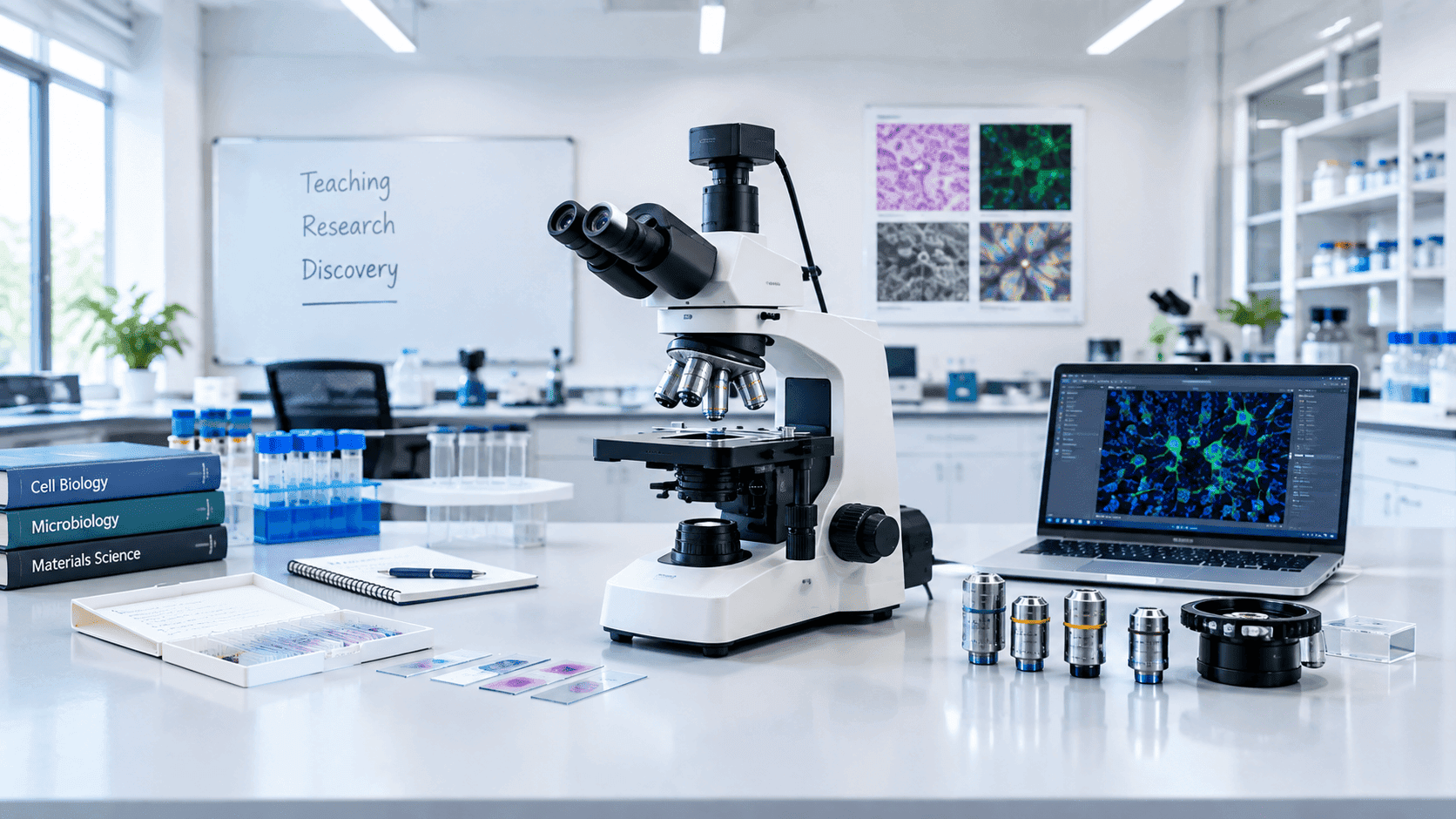
Choosing Microscopes for University Laboratories: Teaching and Research Requirements
Choosing microscopes for a university laboratory is not simply a matter of selecting the highest magnification or the most advanced model available. A teaching laboratory may need robust microscopes that are easy for dozens of students to operate, while a research laboratory may require advanced imaging, specialized contrast methods, fluorescence, digital documentation or compatibility with other analytical systems. The right microscope therefore depends on what students and researchers need to…
 Ramit Gupta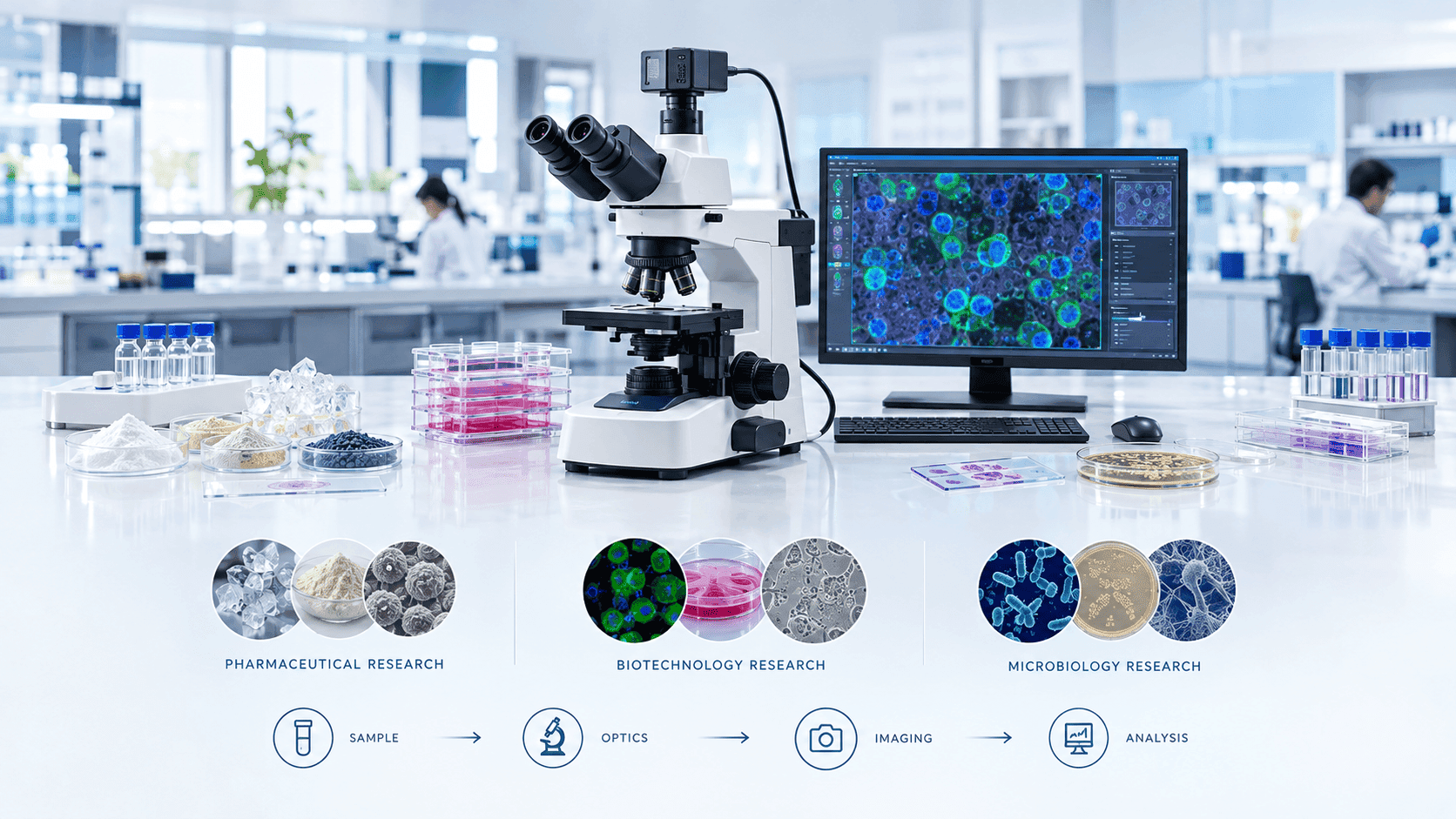
Choosing the Right Microscope for Pharmaceutical, Biotechnology and Microbiology Research
Microscopy plays a critical role in pharmaceutical, biotechnology and microbiology research. From examining microorganisms and cultured cells to evaluating formulations, crystals, particles and biological structures, the right microscope can turn an otherwise difficult observation into reliable visual information. However, choosing a microscope for a research laboratory is not simply about selecting the highest magnification. Different applications require different combinations of resolution,…
Ramit Gupta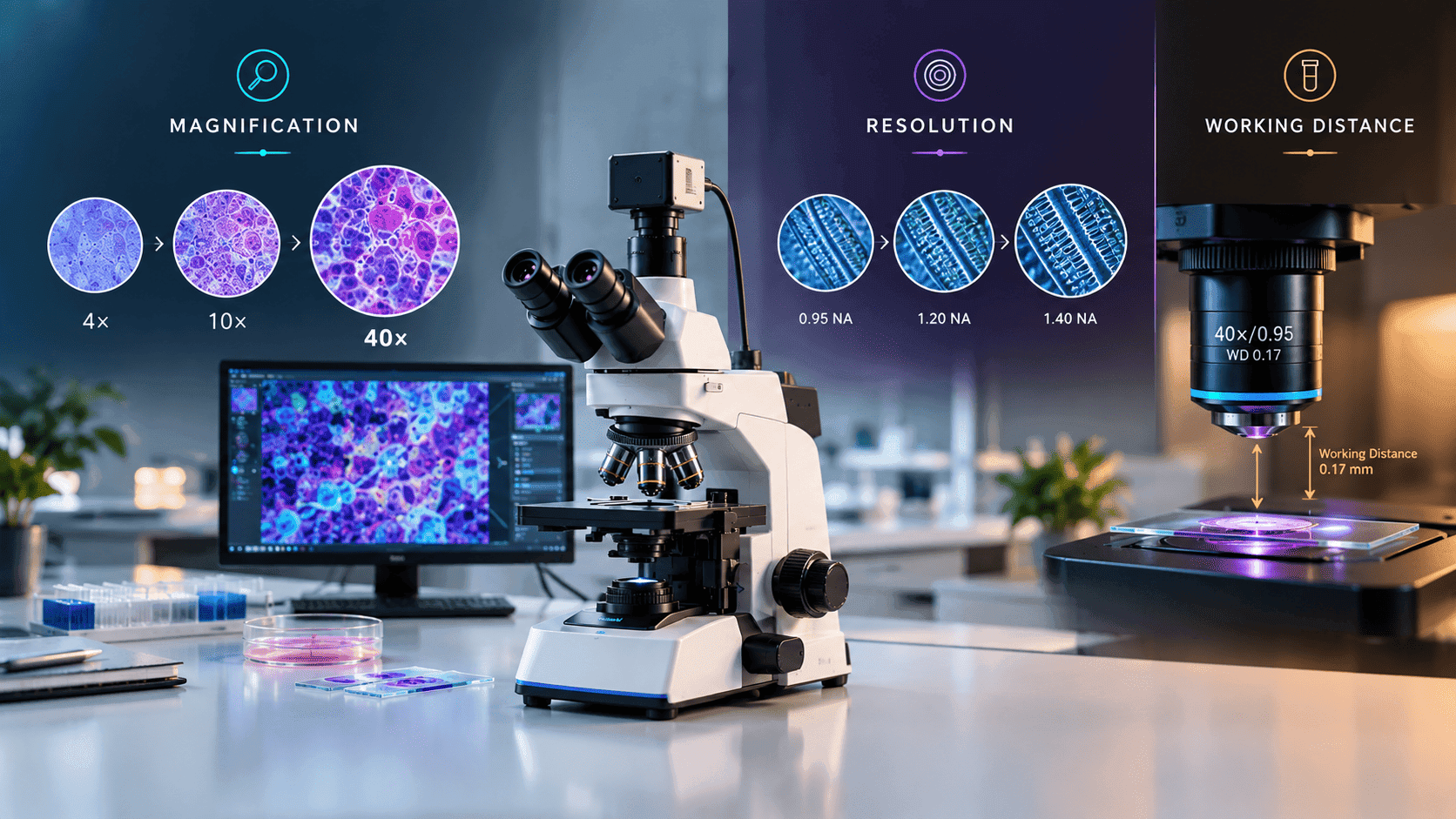
Microscope Magnification, Resolution and Working Distance Explained
Choosing a microscope based only on its highest magnification can lead to the wrong instrument for a laboratory or research application. Magnification, resolution and working distance are three different optical specifications , and understanding how they interact is essential for selecting the right microscope objective. Magnification determines how large a specimen appears. Resolution determines how much fine detail can actually be distinguished. Working distance describes the physical space…
Ramit Gupta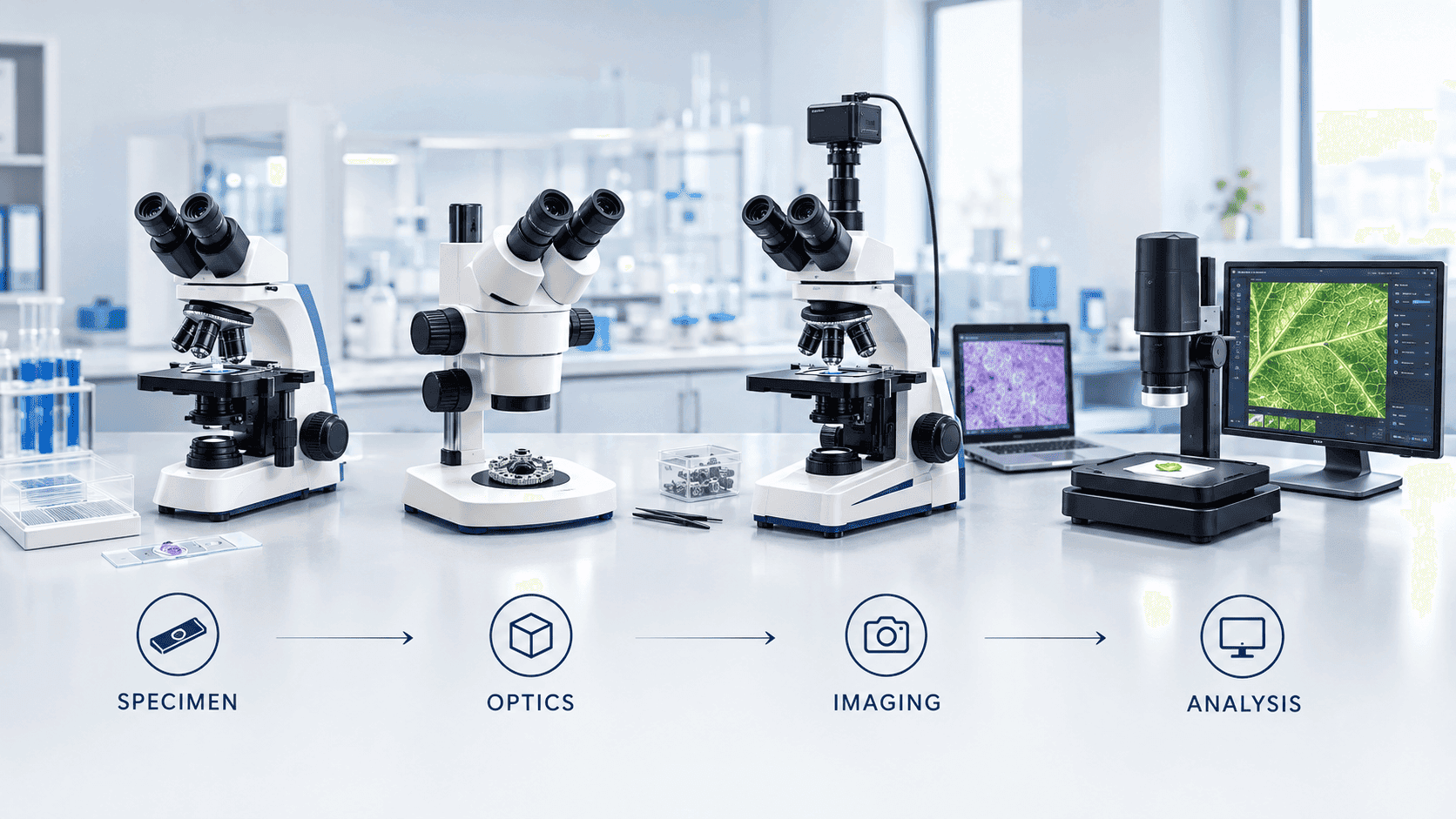
Compound, Stereo, Trinocular and Digital Microscopes: Which One Is Right for Your Application?
Choosing a microscope becomes much easier when you stop starting with magnification. The better starting point is the specimen, the information you need from it, and the way the image will be used. A compound microscope, stereo microscope, trinocular microscope and digital microscope are not simply four competing versions of the same instrument. They describe different aspects of microscopy: optical design, viewing geometry, camera integration and image delivery. One microscope can, for example…
Ramit Gupta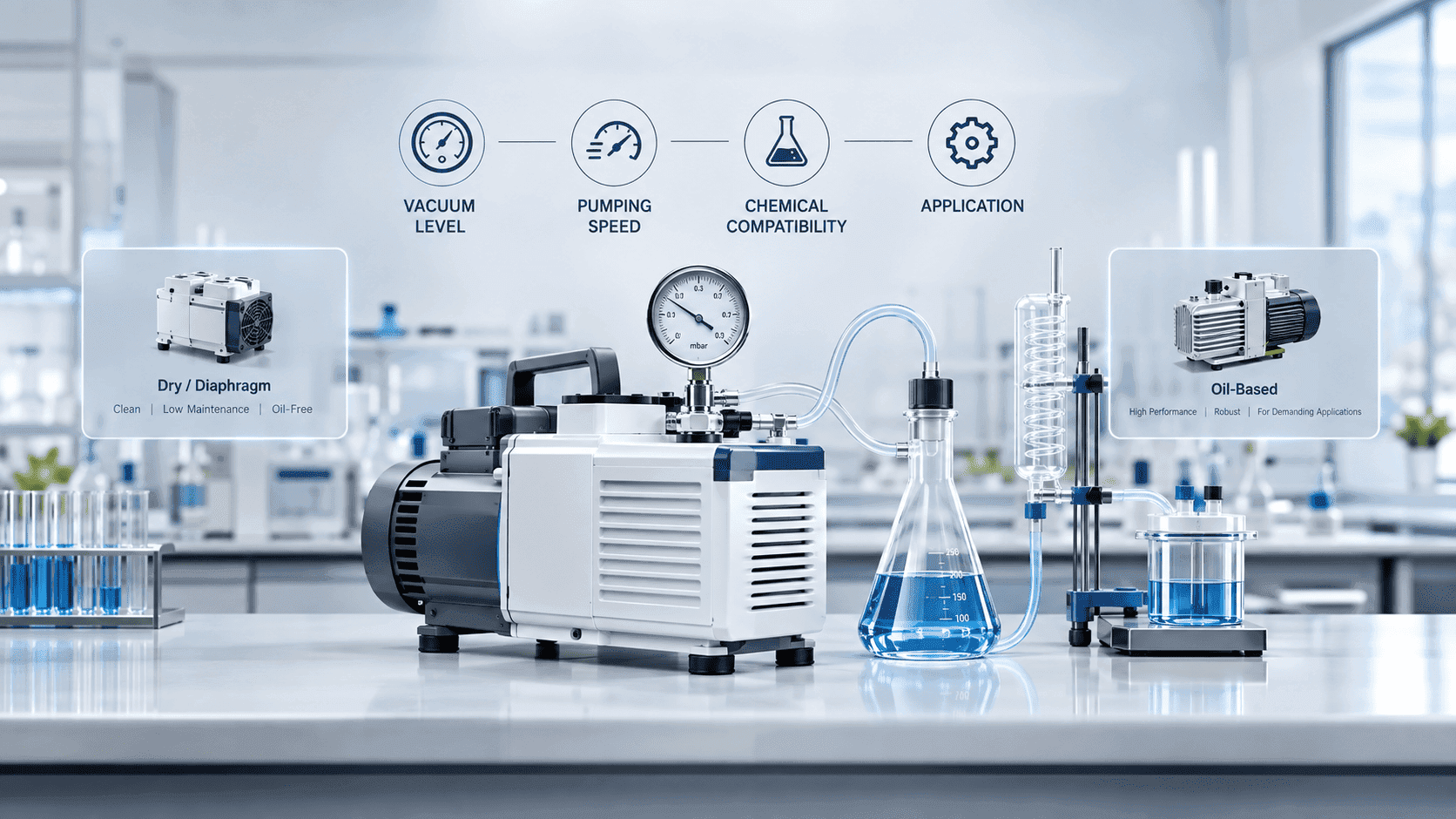
How to Choose the Right Laboratory Vacuum Pump for Your Application
A vacuum pump is often treated as an accessory to a laboratory instrument. In many workflows, that is a mistake. The pump influences how quickly a system reaches vacuum, how deeply it can operate, how it handles solvent or water vapor, how much maintenance it requires and how reliably the connected process runs. The right laboratory vacuum pump cannot be selected by ultimate vacuum alone. Application, pumping speed, vapor load, chemical compatibility, required control, duty cycle, noise, mainte…
Ramit Gupta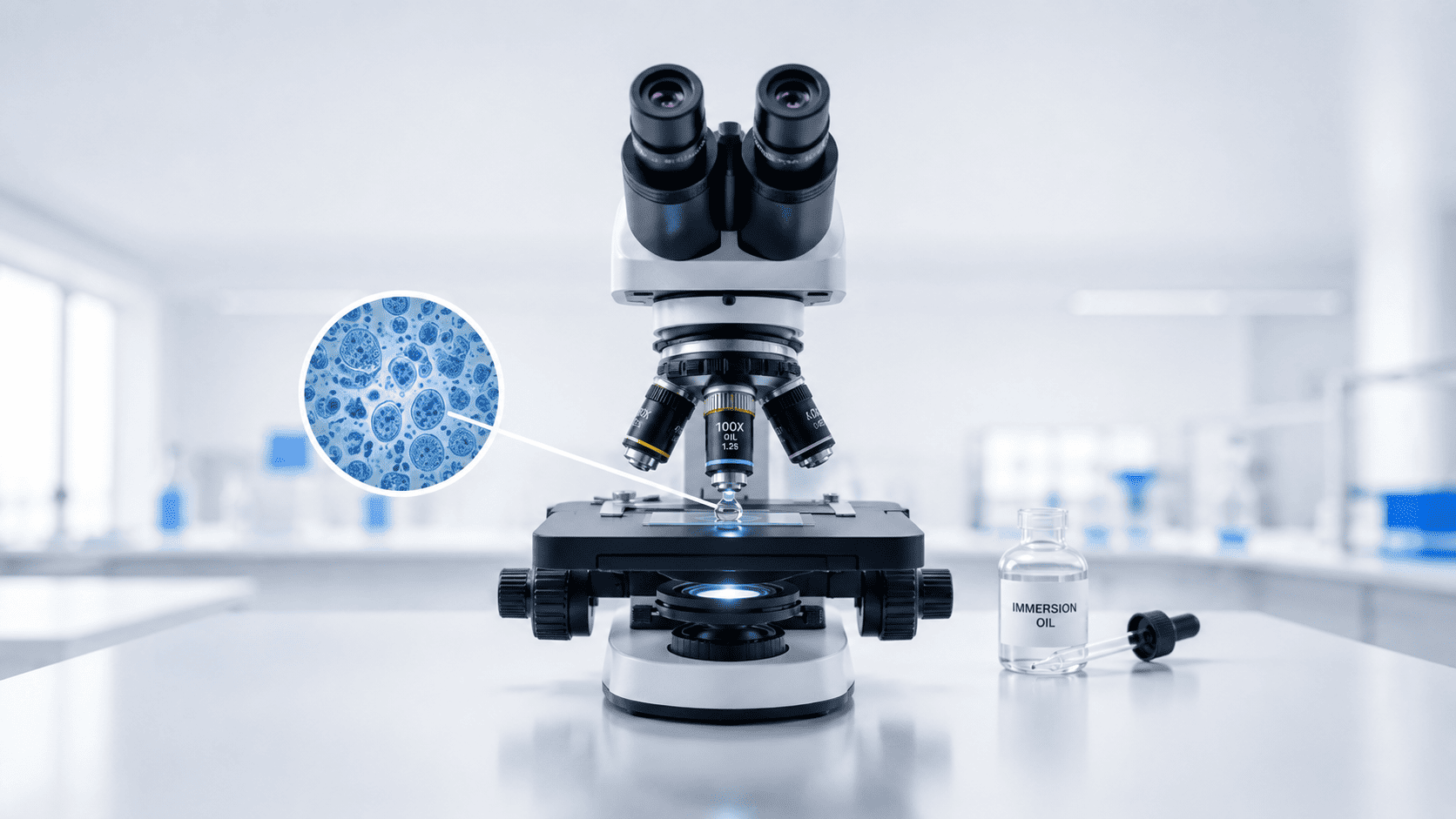
How to Use a 100× Oil Immersion Lens Under a Microscope
A 100× oil immersion lens is a high-power objective used in light microscopy when you need to observe very small structures that cannot be resolved clearly with lower-power objectives. It is commonly used in microbiology, bacteriology, hematology, histology, and clinical laboratory work, particularly for viewing bacteria and other fine cellular details. The key difference between an ordinary 100× objective and a 100× oil immersion objective is the use of immersion oil between the microscope sli…
Ramit Gupta